Showing posts with label respect. Show all posts

Saturday, October 18, 2014

14 Things I Want to Tell Folks About to Be Married


I'm performing a marriage ceremony this afternoon.  The weather doesn't look promising for the planned outdoor event, but no worries, we have a back-up plan.  But these days of such promise always get me to thinking about what makes a marriage work.  We hear so often about the failures.  But there are many success stories out there as well.  

Here, then, are some of the things I hope people entering into the grand adventure of marriage know, take on board and keep:

1. No, I cannot tell whether you will succeed or fail as a couple.  Chance are neither can you.  The  
one thing that seems to mark the difference is that both people are people who keep commitments, for the fact is that there will be days when it’s easy to stay together, but there will be just as many when it’s the hardest thing you’ll ever do.  Sometimes the promise is the only thing that holds.*

2. There are three rings rather than two.  Visualizing the covenant aspect of marriage, where God is the other party to the compact, friend Jim White pointed yesterday to three wagon wheels fused together as his vision of marriage – there are three rings, not two, he observed.  Jim’s right.  God is in the mix.  Always.  Forgetting that is costly.

3. Be sure you like each other.  Love and desire are fine things.  But if you do not, cannot, like the person, you cannot, you will not, last.

4. Matching values matter.  You don’t have to be identical.  You can even be very different.  But your values, the core things you hold dear, should match.  It’s a pretty painful life to spend with someone who thinks what you hold dear or sacred even is silly, foolish, unimportant or something to be daily trounced.

5. You can’t cure each other.  If there are blindingly obvious problems, they will not get better.  They will, in fact, get worse.  Neither of you are the cure for the other.  Marriage is not a hospital.  

6. Don’t forget to dance – often.  Have fun together.  Laugh together.  Dance together.

7. Don’t make the other person your ‘half’ of anything.  If you are not already whole, they cannot, contrary to Jerry Maguire, complete you.  It isn’t their job, it isn’t within their ability and it’s a recipe for disaster to expect.

8. Your failures are no one else’s fault.  Never blame each other for what you have done or failed to do.  Regardless of circumstances or context, your choices are just that: yours.  Own them.

9. Words matter.  Use them wisely, lovingly, judiciously, always.  Ditto for refraining from using them.  Keeping silent is the best option when all you’ve got to say is hurtful.

10. Money doesn’t.  Unless you let it.  Fights about money are always about something else:  power, control, security, felt needs, fear.  Respect, mutuality, shared values, these are what you’re really searching for when you fight about money.

11. Only God can be your god.  No one person can fulfill all your expectations, desires, wishes, needs.  So have other friends.  And do not make of your spouse an idol, for he or she will surely disappoint if you do.

12. Trust is something given as well as something earned.  Actually, trust is more about grace than it is about merit.  We trust not because someone is trustworthy.  We trust because we are trusting.  If there is no trust, if there is jealousy, insecurity, questioning of every motive, every action, there is no trust.  And the absence of trust is a killer of any relationship, especially a marriage.

13. Believe, desire and work for the best for your mate as well as for yourself.  Always.

14.  Forgive often.


___________________
*I am speaking here not of abusive or extreme situations, but of ordinary marriages with ordinary challenges.  For even then, living side-by-side with the same person, year in and year out, is hard.  Really hard.


Wednesday, June 11, 2014

On Not Paying Attention


Paying attention – heeding the other – no small thing in our society, we demand it from ourselves and others from an early age and I am left to wonder why.  For paying attention is not really about actually noticing someone else or what they’re saying or doing.  When we in these United States speak of paying attention, what we really mean is that you must heed me in a way that lets me know you’re heeding me.  Otherwise, you are not “paying attention” to me.

Spouses demand it from each other.  Parents from children although children do not have the right to expect it from parents.  Teachers certainly expect it from students.  And here is the rub.

A little guy in my family is not one for paying attention.  Never has been.  To the chagrin of his parents and others, he probably never will be.  But I am not to sussed by his supposed lack of attention for one very simple reason: this beloved boy-child comes from a very long line of inattentive ancestors and I am chief among them.

Don’t get me wrong: social skills matter.  But I have to ask whether they matter as much as we think they should.  When it comes to school, the point (it seems to me) to paying attention is to learn.  Turns out this grand son actually does quite well in school with his subjects.  But he does not do well in communicating to the teacher that he is present.

Given that he’s doing well, he must actually be paying attention to the subject matters at hand (either that or he was simply born knowing his school subjects, which, while I’d like to think he’s that smart, seems highly unlikely).  So it seems to me that his problem is that somehow, either with eye contact or its lack most likely, or with moving about or talking with other students or drawing when he’s supposed to be ‘listening’, the teacher is interpreting his behavior as inattentiveness when really, he’s hearing everything she says, or enough at least to teach him what she wants him to know.

So what is the problem?  From my own extensive experience, I conclude that when it comes to attention, perception is everything.  So often am I perceived by others to not be paying attention to them.  You’d have to ask them why they think so.  Maybe it’s because I’ll often be looking somewhere else.  Maybe it’s because I seem to be doing something else.  Maybe it’s because I do not offer the expected response or when I’m listening especially attentively, I offer no response at all because I am still listening, waiting, for you.  That’s all speculation on my part.

But I can tell you that my hearing is just fine and I hear it all (sometimes I wish I didn’t, but that’s another story).

Maybe it is a character flaw not to give folks the response they seek when we’re communicating, whether it’s eye contact, head nods or other non-verbal prompts, or verbal engagement.  And if someone goes to the extreme on avoiding those things, I get that it’s a problem.

But the daily input of information can be overwhelming.  And our world leaves little room for quiet.  So me and my kind have a tendency, even amidst our own talking, to create our own quiet spaces inside our own minds simply because it’s restful there.

But don’t worry.  We hear you.  Really.  Just look at our test scores.

Friday, February 10, 2012

Am I a Safe Space?


The phrase ‘safe space’ in our time often refers to literal safety, comparable to the older aphorism, A man’s home is his castle, the belief that where we live should be free from all unwanted intrusion.  It can refer to domestic violence shelters for battered women, protective orders for the victims of stalking, and child protective actions to keep predators of the young at bay.

But ‘safe space’ has also come to signify whether a group of people offer psychological and spiritual safety to each other . . . or not, as in whether it is ‘safe’ to offer another point of view within a particular context.

Like any good idea, the notion of safe space can become meaningless when it over reaches, as in the felt need to have no disagreement expressed with one’s own views, as disagreement is too often equated with threat or danger.

From Flickr Commons
We are allowed to disagree with each other.  But in the United States, my own belief is that we don’t know how to disagree or how to be disagreed with very well.

Disagreement can be healthy and can lead to new learnings, new ways of being, for all of us.  If I listen, truly listen, to you, I can learn about a point of view I knew nothing of before.  My point of view can bring the same eye-opening opportunity to you.

As someone with definite opinions (which means nothing more than that I know my own mind really well), I have often been accused, directly and indirectly, of threatening the safe space of others.

Usually, I am left puzzled after such conversations.  What did I do or say that made the other person feel threatened?  Is all disagreement threatening?  Or is there something about the way I express myself, the certainty with which I speak, that leaves the other person feeling excluded or attacked?

Surely there is middle ground between the extremes of social and political discourse in our time of either (a) not discussing areas of disagreement at all (as in mother’s admonition to never discuss sex, religion or politics with others) or (b) name-calling, shouting vilification.

Which brings me right back to the question: how can I be a better safe space for those with whom I disagree the most?

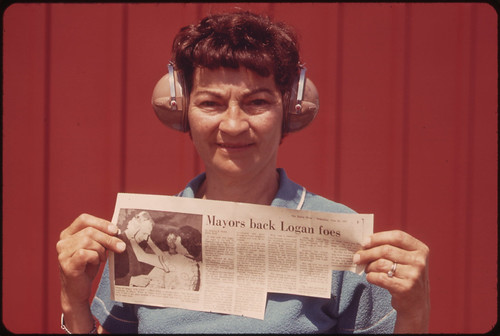
I can speak more quietly.  I can speak less and listen more.  I can take off my ear muffs when it comes to the things I don't want to hear.  I can try to do better.

But here’s what I’d like from you in return: please do not assume because we disagree, that I am bad or mean or not listening.  I may hear you very well, but simply see things differently.

And let’s agree to this: when we post stuff on FB or in our blogs or anywhere into the technological ether, let’s pay attention, special attention, to truth.  When I get it wrong, tell me.  Insist that I retract the lies.  And allow me to do the same with you.

Let’s be more gracious, especially to those with whom we disagree.  They aren’t monsters.