Showing posts with label President Obama. Show all posts

Thursday, September 11, 2014

It is No Accident 2.0


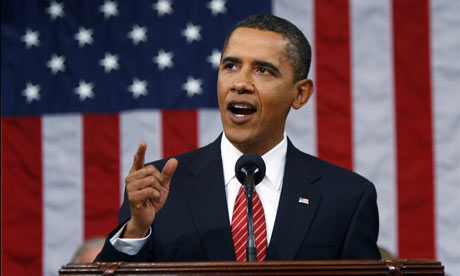
It is no accident that President Obama’s speech calling for war
          by another name was given on September 10 – the eve 
          of an anniversary of horror in the United States.

Last September 10, President Obama gave his address about Syria and its chemical weapons.  This year, the President again addressed a crisis of the Middle East on September 10, at the same time that he was saying, “ISIL is not “Islamic.” No religion condones the killing of innocents, and the vast majority of ISIL’s victims have been Muslim.”

At the same time that he decried, by implication, any broad-brush condemnation of Islam, President Obama engaged in appealing to the tendency to broad-brush condemnation of all things Muslim by the very date of his speech, timed so thoughtfully to coincide with but not usurp the commemoration of, September 11, 2001.

It was and is manipulative in the extreme.  And it is a calculated effort to stir the American people to again see unknown and unnamed forces from the Middle East as terrifying hordes about to descend upon our borders.

If the cause be just, there is no need or requirement for propaganda or manipulation.  Thus does the very use of such techniques in order to ‘convince’ us of the President’s ‘case’ suggest that it is a weak case at best.


It is no accident that President Obama mentioned Russia 
          in his speech.

“ It is America that has rallied the world against Russian aggression, and in support of the Ukrainian peoples’ right to determine their own destiny,” the President asserted as part of a laundry list of examples of supposed American moral superiority and claimed unique positioning in history as justification for his plan against ISIS (a.k.a. ISIL).

It is no accident that the President mentioned Russia, ally to Syria and global actor in its own right.  Russia perceives itself as having vested interests in the Middle East as well as we do.  Turkey, a NATO member, lies uncomfortably close geographically to Russia from its point of view.

Russia and the United States remain all too willing in the present global climate to continue to fire shots across each other’s proverbial bow and this was yet another from our side of the imaginary trench.

This, I read, as President Obama telling Russia to stay out of it.  Why Russia would listen to us any more than we listen to them I cannot think.


It is no accident that President Obama referred to “Kurdish” in
          addition to “Iraqi” forces – as something separate 
          and distinct.

All due respect to my many Kurdish friends, there is, at least technically, no such thing as “Kurdish forces”.  The President presumably refers to the Peshmerga, the fighting forces originating in the north of Iraq where the Kurds historically reside.

The Peshmerga have remained intact and visible since the US invasion of Iraq in 2003, but in more recent years, have largely been absorbed into the Iraqi army in its various permutations, although they do see themselves largely as a separate entity from the rest of the Iraqi army.

But since August, various countries around the world have been arming the Peshmerga.

President Obama said these things last evening:  “These strikes (air strikes against ISIS to date) have . . . given space for Iraqi and Kurdish forces to reclaim key territory.”  and “[These American forces] are needed to support Iraqi and Kurdish forces . . .”

President Obama recognized Kurdish fighting forces as something separate and apart from Iraqi fighting forces, in effect recognizing the Kurdish semi-autonomous region of Iraq as its own separate country.

This gels nicely with the desires of the Kurds themselves.  But it will not end well for them.  Turkey has a substantial Kurdish population that desires to form a Kurdish nation.  The PKK, the Turkish-Kurdish resistance, has been labeled a terrorist organization by Turkey and by the United States.

Iran’s sister organization, PJAK, with similar intentions and tactics to PKK, is actually supplied arms by the United States in order to disrupt that regime.

President Obama glibly names the Kurds as a separate entity in a speech televised around the world, giving hope and quarter to the aims and desires of the Kurdish peoples who have long desired to have their own nation-state.  But he doesn’t mean it.  When Turkey complains, as it has in the past and surely will again, about the impact on its own internal politics with its Kurdish population, Washington will, as it has before, capitulate, for the simple reason that to not capitulate will unite Syria, Iraq, Iran and Turkey in common cause against the Kurds, which Washington will perceive that it can ill afford (remember Turkey’s strategic importance relative to Russia).

But the Kurds aren’t fools.  They’ve been down this road many times with the West.  Only time will tell what will become of their resolve, but make no mistake, this current violence is an opportunity for the Kurds.  Maybe it’s one they deserve.  I am in no position to judge; but I do know that it will be costly for all involved.

It always is when so many motives with so little power are on the table.


It is no accident that President Obama asserted his ‘authority’ to 
          act as he already has and clearly plans to continue to do, 
          congressional imprimatur or no.

In a December 20, 2007 interview with the Boston Globe, then Senator Obama said, “The President does not have power under the Constitution to unilaterally authorize a military attack in a situation that does not involve stopping an actual or imminent threat to the nation.”

The only thing that has changed between then and now is that Mr. Obama himself is the one wielding the power.

The President’s assertion last night that he has the authority to act as he already has and plans to continue to do, with the expanded and ominous threat to invade another sovereign nation (Syria) to achieve his stated goals, with or without congressional approval, merely continues the actions of presidents in the aftermath of World War II (the last declared war under the provisions of the constitution that the United States has engaged in).

There is no virtue in announcing ones intention to violate the laws of one’s own nation.  But there is clarity.

And it might be good political strategy for the president to throw down on Congress in this manner, but it isn’t good governance.


It is no accident that President Obama referenced no direct 
          threat to the United States, but raised all of our 
          collective bogey men to stir our fear of what might come.
So ISIL poses a threat to the people of Iraq and Syria, and the broader Middle East – including American citizens, personnel and facilities. If left unchecked, these terrorists could pose a growing threat beyond that region – including to the United States. While we have not yet detected specific plotting against our homeland, ISIL leaders have threatened America and our allies. Our intelligence community believes that thousands of foreigners – including Europeans and some Americans – have joined them in Syria and Iraq. Trained and battle-hardened, these fighters could try to return to their home countries and carry out deadly attacks.  -- President Obama's speech of last night

The language the President used was careful but revealing: the only Americans threatened are those living and working in those areas where ISIS/ISIL are located.

But they “could” threaten us.  And although there is no knowledge of any specific plots of attack, there could be.  And those of ISIS/ISIL who are from Europe or the United States “could” come home and attack us.  Just like on September 11.  Except not.

President Bush specifically abandoned any pretense at just war theory in his invasion of Iraq in 2003 and President Obama has never looked back from that dramatic shift in policy.

Everyone who doesn’t like us is a threat to us.  And we to them.  But every threat is not a justification for war or invasion.  And the distinction between ground and air attack is a distinction without a difference in terms of whether it is constitutional or proper.

The distinction between ground and air is simply to assure the American people that its children will not die in the numbers that the children of our enemies will.  In others words, it’s a tactical point rather than a legal or procedural one.  And I, for one, am not particularly interested in debating tactics.

I am interested in a national debate on whether to do this at all.  By simply doing it and then asking permission, our President has taken that privilege and responsibility of citizenship away from us.

And we are the poorer for it.

The shame, however, is ours as much as his, for we have let him do it.


Tuesday, December 10, 2013

Life Going On

I awaken at 6.00 a.m. and listen
to our President’s address 
memorializing Nelson Mandela 
and lay crying in the darkness
of a 6.00 a.m. time difference
between there and here, the dancing
swaying music of the background 
behind the podium a fitting 
accompaniment as one man – 
the first of his kind to lead a nation
in this hemisphere pays homage
to another one-of-a-kind man in 
his own place and time 

with my tears and ears, I too
paid homage and then went
and made Christmas candy
and watched the snow fall

life going on

Wednesday, September 4, 2013

Syria: To Bomb or Not To Bomb

The President says it’s punitive.
The people hear that it will save lives.

The President says it’s to protect Israel.
The people hear that it’s to protect Syrians.

The President says it’s to challenge Iran.
The people hear it’s to challenge Assad.

The President says it’s not about regime change.
Senator McCain hears it’s about regime change.

It is my own view that one of the biggest problems we citizens of the United States have when it comes to political interactions is that we do not listen to our leaders.  We do not hear what they say; we hear what we want them to say.

The second largest problem is that when it comes to contemplated military action, our Congress as a whole debates not whether to but how to.  And as Congress goes, so goes the press by and large.

Thus we are right now in a situation regarding Syria of taking the fact of a strike against that nation as a virtual given, arguing only over the details, when in fact, the whether to at all question is actually the important question of the day.

And thus we are right now in a situation regarding Syria where President Obama is actually being very clear; unfortunately, his citizens are not listening to him.

1. It’s punitive.  Let us take the President at his word: his reason to seek military action against Syria’s government is punitive.  He has actually used the word ‘punitive’.  There are several problems with such an approach:

a. it’s a do-what-I-say-and-not-what-I-do approach to world affairs; and as any (good) parent knows, it’s an approach doomed to fail, for those following and even those not seeming to be paying attention will inevitably do not as we say but as we do.  We supported the use of chemical weapons by Iraq against Iran in the 1980's, to the point of remaining silent in the face of Saddam’s turning those same weapons against his own citizens, the Kurds of the north.  We used white phosphorous on the civilian population of Fallujah.  We will not sign treaties that seek to ban cluster bombs and certain types of land mines.  And even when we do act to oppose such weaponry, we are strangely silent about the manufacturers and holding them accountable.  To claim the moral high ground, it’s axiomatic that one must actually be standing on the moral high ground at the time.

b. If it’s punishment we’re after, there are a whole host of remedies in the international arena.  The International Criminal Court provides a venue for the prosecution of crimes against humanity and what we term war crimes.  The United Nations has vehicles for other remedies, including sanctions, the sending of peacekeepers and inspectors.  In fact, the UN did send inspectors.  Their report has not yet been produced.  Their testing is not yet complete.  To circumvent the United Nations yet again is to effectively say to the world that the United States does not even believe in the possibility of international law and action.  The lone wolf mythology we cling to is costly beyond our ability to imagine, I fear.  And punishment is a poor substitute for a just peace, especially a punishment that seeks to say that killing in a particular way is wrong by killing in a different way, but killing nonetheless.

2. It’s about Israel, not Syria.  The fear about chemical weapons is as much, if not more, about our concern for the people of Israel than it is for the people of Syria.  It is commonly accepted (although not publicly stated) that the source of information/ intelligence about this most recent attack is Israel.  Given its geographical proximity and their historical hostility, Israel is right to be concerned.  Whether Israel’s concerns and ours align in this particular instance is something that should be discussed.  It’s not.  The President has named the concern.  But no one else seems interested in discussing, weighing and evaluating it.  And remember point #1 – this is about punishment.  The President has said so.  There is no goal to save Syrian lives.  There is no reason put forth that the contemplated action by the US will reduce violence in Syria.  Many believe it will have the opposite effect of escalating an already violent conflict.  When acting pre-emptively on behalf of a party such as Israel, we have to at least admit that we’re willing to sacrifice Syrians to do it.

3. Challenging Iran.  Secretary of State John Kerry stated that one reason to strike against Syria is to send a message to Iran, North Korea and others that chemical weapons may not be used with impunity.  Setting aside the cruel irony of the US telling Iran that it will not tolerate chemical weaponry when it was the US that enabled Saddam to use chemical weapons against Iran in the 1980's war (by providing Saddam with critical intelligence on where and when to launch his attack (Democracy Now), are we really going to kill Syrians in order to teach Iran a lesson?  Are we, in so doing, going to ignore the mutual-defense pact between Syria and Iran?  Are we really going to provoke Iran and its allies, drawing them into (or further into) this conflict?  Did we learn nothing about how global conflicts begin from World War I?  Are we really interested in restarting the practice of proxy wars we retired with the Cold War?  Are we really ignoring Russia and China in all this?  Are we really so immature as to believe that to explore alternatives to military air strikes is ‘doing nothing’?  Is our press so ineffectual as to ignore these vital questions?

4. It’s not about regime change.  President Obama (who will be making the decisions, no matter with whom he consults) has been very clear: he is not seeking regime change.  Senator McCain is not listening and insists that regime change is what must occur.  The problem I see is that following the course of either man does nothing to reduce or eliminate the bloodbath that is Syria today.  We the people would do well to remember that we’re not in this to save the Syrians.  This is not the good guys versus bad guys stuff of movies.  This is exactly what our President is saying it is: killing some Syrians, destroying some territory, to show the Syrian leadership that doing what we’ve said not to do will cost him because we said it would.  It’s a penalty.  No more, no less.

What might we do instead if we’re really interested in helping Syrians?

1. If you’re a praying person, pray.  One of the most important lessons I’ve learned about prayer (wish I could recall the source) is that God does not reverse the past.  What has happened already has happened already and it will not be undone.  Prayer, effective prayer, deals with the present and the future.  For those of us in the United States particularly, we might pray for wisdom, patience, forbearance, and mercy on the part of our leadership.   We might pray that our own eyes be opened to new pathways of peace and the strength, courage and dedication of resources to make them happen.  Weaponry as a problem-solving technique has become too easy in our time.  Military solutions are our go-to position all too often, ironic given its largely ineffectiveness at meeting our stated goals of peace.  This praying isn’t about patriotism.  It isn’t about having our own way.  It isn’t about undoing the past.  It’s about being empowered by the God of all to do right in the world and by the world.  The work of doing right is hard.  It takes lots of time and effort and money.  And it doesn’t often get a parade at the end.  And sometimes it gets a cross.  For a Christian at least, that shouldn’t be a surprise.  So let us praying people pray like we mean it and live like we believe it.

2. Invest in peace and the ways of peace.  We might marshal our impressive resources in the cause of just peace -- for at no time in our nation's history have we dedicated the resources for peace preparedness that we do to war preparedness. What might we do now?

a. we might pony up really big money to make refugee camps and other sites genuine places of safe haven.  On an individual basis, we might donate money to UNHCR (United Nations High Commission on Refugees) to provide for the masses of Syrian refugees (shout out to Jon Stewart on the Daily Show for highlighting this issue and way to help on September 3's show).

b. We might mobilize massive numbers of trained peacemakers, mediators and folks trained in the ways not merely of conflict resolution but also of building a civil society based upon universal humanitarian goals. We mobilize our military - why not our non-military?   And there are Syrians who are trying desperately to build and rebuild their own civil society.

c. We might ask our elected leadership to stop any support for the rebels in Syria unless and until they attend peace talks in Geneva.  We might ask other nations supporting the Assad regime (Russia and Iran) to do the same.

d. We might start punishing those who produce chemical weapons in international tribunals.

e. When it comes to the dedication of troops, we might use the United Nations - peacekeepers from the UN actually have a pretty good track record - a fact that gets overlooked. (and yes, I remember Rwanda).

f. We might wait for the UN inspection team to come back with its report/findings. I am no fan of Mr. Putin, but he actually asked a pretty good question - why would Assad use chemical weapons exactly when the UN inspection team was in country? Assad might be a monster, but is he really that much of an idiot?

g. If the goal is punishment,  we might treat this as a crime.  If so,

(1) proof beyond a reasonable doubt is required. Shouldn't we have the same level of proof for the killing of many as we do of the killing of one? and

(2) there are already processes in place in the international community for that. So charge Assad with crimes against humanity and prosecute him for them.

(3) If, on the other hand, the goal is to stop or reduce the numbers of civilians from being killed, we have to remember that this is a civil war and all sides are armed to varying degrees and all sides are using violence to impose their will both upon the civilians as well as the opposition. The only thing I know to change that dynamic (other than a clear winner, which rarely happens) is negotiated peace. The bottom line for me is that the answer to grab our guns just hasn't been effective, ever, at reducing or eliminating the numbers of the dead -- it's only been effective at giving one side or the other clear victory after the bloodbath.  Isn't it well past time to commit , really commit, to the ways of peace?

(4) A side note worth remembering: the other day NPR interviewed 2 sisters in Syria - they were of opposite opinions. Family. One favored the rebels and hated the Assad regime for its cruelties. The other feared the rebels, particularly as a woman, certain that her own life would not be worth much if they were to prevail. When I jump into someone else's fight, I'd better have a good idea about all that's at stake. Ask the Iraqis.

When I take up a gun, a bomb, or any instrumentality of violence, I am not stopping people dying. What I'm doing is simply changing the cast of characters who will die.

And logically, if I am 'letting' people die by not bombing Syria, am I then responsible if the bombing results not in less deaths but more, if Assad increases rather than decreases his attacks on the civilian population?

We can't predict with certainty the outcomes of actions because we're not in control of the universe of possibilities. That doesn't mean we do nothing. But it does mean that we dare not act surprised when our efforts to 'help' backfire with more violence that we participated in escalating.  ( See Slate report on the increase in civilian deaths in which other countries intervene in armed conflict.)

But I remain stuck in pondering whether it really is the best we humans can do when children are dying to drop more bombs that risk killing more children? Why can't we create safe havens for them to run to? Why can't we teach their parents a better way? Why can't we spend the money on things that actually work? I wish I knew.

__________________
Other posts I've written about Syria:  There's a War a CominJumping Rope in the SandCandidate Questions on Foreign Policy, and Grading the Debate.


Thursday, March 7, 2013

Thank You Rand Paul


I have long been disheartened by our failure as citizens in these United States (I include myself in this) to respond to attacks by our own government against the very things we say are most dear to our very identity – particularly the Bill of Rights.

Parts of the Patriot Act contain provisions that allow for the labeling as a terrorist activity actions by people like me who teach others the ways of non-violence, if those being taught are ‘terrorists’.  So to teach people who use violence to achieve their ends other ways, non-violent ways, to show ‘terrorists’ how not to be terrorists, it turns out, is actually terrorism.

Guantanamo Bay.

Rendition.

Waterboarding.

Suspension of due process of law.

Denial of the right to counsel.

Cruel and unusual punishment.

Denial of equal protection under the law.

Free speech turned into costly speech, even treasonous speech.

Assassination of American citizens.

And the press was largely silent on them all – even the drone program – until someone got ahold of a piece of paper, as if paper proved the reality more real than the bombs from the sky.

Democrats and Republicans alike are guilty of these massive infringements and fear is their weapon of choice to coerce our assent.

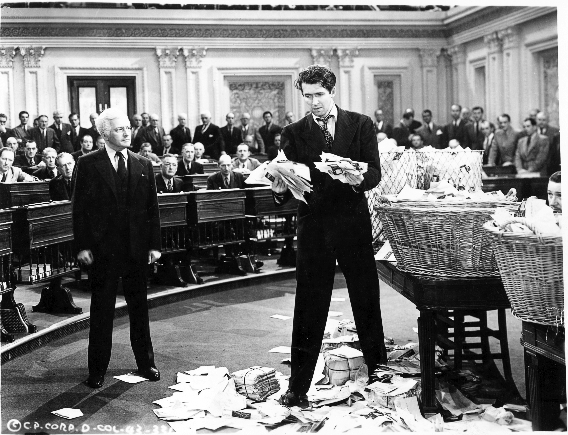
Filibuster scene from Mr. Smith Goes to Washington
So yesterday, Rand Paul, Senator from Kentucky, did a rare and wonderful thing: he filibustered on principle, the daring principle, fundamental to our form of government, that no person, including a president, is above the laws of this nation, the most fundamental of which is our Constitution.

For those who claim it was pointless, consider:

1. Words are never ‘only’ words.  Words matter.  Words have power.  Words can and have changed a world.  If you doubt it, read Gandhi, Jesus, King.

2. People are paying attention to what we have so long ignored.  People across political divides are asking themselves and others if this is who we really are.

3. Journalists are being shaken from their power-bound lethargy to ask challenging questions of the powers that be.  Some have been all along (Amy Goodman of Democracy Now! and Al-Jazeera in English come to mind).  But finally, so-called mainstream media are asking too.

4. I’m glad it’s a Democrat this time.  That way, Republicans, formerly so loathe to question anything President Bush did along the same line are freed to challenge the political opposition for a just cause and Democrats are forced to think about whether their indictments of President Bush were merely political opposition or whether they’re actually questions of fundamental justice.

So hats off to Rand Paul.  As an American citizen, I thank you, sir, for your service.

Tomorrow we may and probably will disagree.  But yesterday, you stood for us all.

Thursday, February 7, 2013

Drone Strikes & Mother Jones: When is a Radical Not a Radical?


Mother Jones was a socialist and a union organizer and odd to our ears, an opponent of women’s suffrage.  Love her or hate her, the woman was, when it came to matters of workers’ rights, a flaming anti-government liberal.  She was tried in West Virginia for ignoring an injunction from the courts banning meetings by striking miners.  She was convicted of conspiring to commit murder by a military tribunal for her activities during the Mine Wars in southern West Virginia in the early 1900's.  Released, similar charges were brought for her activities in Colorado, where she was escorted from the state.  Later she was tried for libel, slander and sedition (action leading others into insurrection or rebellion) in a civil action brought by the Chicago Tribune.*

The magazine bearing her name was founded in 1970 as an underground (subversive) publication.  Wikipedia: Mother Jones

David Corn works as a reporter for Mother Jones.  The thesis I propose is that Mr. Corn has forgotten his legacy; that he no longer speaks for the values and traditions of Mother Jones and should withdraw his association therefrom.

In a word, a radical he is not.  At least not when it comes to drones.

The exchange yesterday on Hardball, MSNBC’s purported liberal talk show hosted by Chris Matthews, was troubling, to say the least.  I have long understood that most of these shows, right and left, are little more than the personal opinions of the participants, writ large over the pages of history.  As such, they can be entertaining, but they are seldom, if ever, illuminating or beneficial.

That said, to represent one’s self as a spokesperson of a certain bent or ilk, shouldn’t one actually be of that bent or ilk?  And that is why I focus particularly on Mr. Corn, who claims to speak on behalf of a magazine, the credentials for which include its very name: Mother Jones.

To invoke Mother Jones is to invoke a radical resistance to power and dominance, and to do so vehemently.  This, after all, is the woman who organized a children’s march from Philadelphia to President Theodore Roosevelt’s home to protest child labor.

Wearing this mantel, read what Mr. Corn had to say about drone strikes, the death of civilians in the strikes, and the implications to American ‘democracy’.** While reading, bear in mind that Mother Jones’ web page today contains linked stories, such as “Obama Targeted Killing Document: If We Do It, It's Not Illegal” and “Barack Obama, Our Drone President:  How a community organizer and constitutional law professor became a robot president.”, implying, at the least, a criticism of the practice. Mother Jones Too bad Mr. Corn didn’t read his own magazine before going on Hardball.  Hard Ball: Drone Strikes

Chris Matthews as host framed the conversation thus: Today we talk about the overseas drone program and the White House justification of drone strikes on American citizens abroad. [Matthews showed a clip of White House spokesperson Jay Carney, saying that the drone program is designed to avoid civilian casualties - fewer die than in an invasion.]

Eugene Robinson said that we have to do counter-terrorism & capabilities of drones are such that this is our best weapon, but shouldn’t there be some sort of judicial oversight like a FISA court?  Especially when we’re talking about a US citizen.

Chris Matthews posited that we are limited what we can do - can either (1) use drones (2) SEAL team attack (Corn - yeah) (3) invade country (Corn - right) or (4) do nothing.

David Corn agreed with Robinson that there needs to be some oversight, such as the FISA court oversight for covert wiretapping.  Matthews then asked  do we have the right to kill?  To which Corn responded that as to an ‘active’ person, a person involved in some ‘operational way’, yes.

Matthews asked, do we have the right to kill Benedict Arnolds? to which Robinson responded, yes - the fact that he’s an American citizen doesn’t bother me.  But it does bother me there’s no structure, no process [of oversight].  Corn was not concerned over the issue of citizenship at all, calling that issue an outlyer, expressing more concern about what the next president might do.

When Matthews focused on the difference between SEAL team attacks and drone strikes, Corn opined that there is less possibility of collateral damage/civilian deaths with SEAL attacks than drone strikes and that the civilian casualties are counter-productive, saying that in Yemen, we have killed clerics friendly to the United States in the drone strikes, creating fear, hostility and blow back.

Matthews asked Corn what he would do if he were Commander-in-Chief: drone strikes or SEAL attack.  Corn’s response – it’s a damn difficult decision to make.

Matthews showed a clip of Republican Rep. Mike Rogers saying about the killing of an American citizen in Yemen by drone strike that he didn’t want his citizenship anymore.  If you join the enemy overseas, we’re going to fight the enemy overseas.  You’ve given that (protections of citizenship) up, to which Matthews commented, once you’re a turncoat, it’s easier for us.  Corn replied, It is.

Corn’s take on the whole thing: there should be “somewhat of a semblance of a rule of law”, apparently because you can trust some administrations (presumably this one) more than others.

This is not an exact transcript, but rather my notes on the video, as the transcript is not yet up on MSNBC’s site.  That said, note the repeat of the principal journalistic mistake when it comes to war and peace issues in our time: the taking of the government position as a given.

Rather than examining the government’s position to see if it has merit, journalists tend to take the government position as a given and then critique that position for its ‘workability’ (will the program accomplish the stated goal?) rather than examining the stated goal to determine whether it is even a worthy or appropriate goal in the first place.

And that, I think, is what happened here.  Mr. Corn, at least, should know better.  After all, he represents a publication that takes its name and identity from a woman who stood outside the machinations of government most of her adult life, speaking from the margins against stated governmental goals like orderliness, support for corporate profit goals, protecting property interests for the wealthy, etc.

So when is a radical no longer a radical?  When he speaks for and on behalf of a government program with no thought to those standing at the margins (always the ones most likely to be harmed by power) and has only suggestions of tweaking, to give the program the semblance of legal process.

More specifically, as a radical myself when it comes to issues of war and peace, violence and non-violence, my problems with Mr. Corn’s words (I’m just as troubled by Matthews and Robinson, but they never claimed to be radicals of the left.  Mr. Corn, at least implicitly, has) are:

1. He assumed that killing an alleged enemy of the state is the only option.  Mr. Matthews phrased our nation’s choices as limited to the manner in which we kill an enemy of the state, as opposed to even examining whether there are other alternatives.  There are.

a. Rather than killing an alleged enemy of the state, that person can be tried, either in person or in abstentia.  They can be provided due process of law.  And they can be found not guilty.  Or found guilty and sentenced to a term of imprisonment as opposed to execution.  The drone program substitutes the judgment of the Executive branch of the government for the judicial branch’s role.  The test of success for a nation such as ours is not how we behave on a good day, but rather how we behave on a bad one.  We have failed that test numerous times in our nation’s history.  Lincoln suspended habeas corpus for reasons of the nation’s security and the Supreme Court backed down.  Franklin Roosevelt created detention camps for Japanese Americans (citizens) without due process of law and for no other reason than their ethnic identity.  John Adams signed into law the Alien and Sedition Acts, used to prosecute those who spoke out freely against the actions of the government at a time when it was feared that the effects of the French Revolution would spread to the Americas.  The consequences of these choices were far reaching.  The Alien and Sedition Acts are said to have sown the seeds for the Civil War.  The problem with the war on terror is that it is not a war.  The powers that be, however, by so naming this series of conflicts ‘war’ while acknowledging that it is not a war, have gotten power’s ‘best of all possible worlds’– power unchecked – as a ‘war’, military actions around the globe that infringe on the sovereignty of other nations are justified and as a ‘not war’, behaviors even the military would not condone (drones are often the purview of the CIA rather than the Pentagon) are carried out.

b. Getting at the root causes of the conflicts.  Many of those recruited to terrorist activities are the disenfranchised, the poor, those with no hope.  It is no accident that Al-Queda provides food, health care and education wherever it sets up.  That our solution to the problem of Al-Queda is militaristic rather than humanitarian shows a short-sighted take on what is happening to real people in real time.

c. Using the United Nations Peacekeeping efforts.  It is popular in the US to nay-say the UN, but the fact is that UN peacekeeping forces are actually very successful around the globe.  And as a body, the UN actually does include humanitarian actions in its strategic plans everywhere it goes.

d. Negotiating with our enemies.  It has become popular to refuse to negotiate with ‘terrorists’.  But if we understand that (1) the nature of power is shifting away from nation states and towards other entities and groups; and (2) that negotiation only need happen when there is conflict, wouldn’t it be sensible to negotiate with those we oppose or who oppose us, regardless of whether their power structure is one we recognize or not?

e. I am sure there are other alternatives.  These are just a few.  None of them were explored in the conversation in which Mr. Corn participated, for the simple reason that the use of drones was taken as a given.  It is not.  The use of drones is neither a given nor an imperative.  It is a choice.  Another choice can be made.  Mother Jones would know that.

2. The dismissal of citizenship as important to the discussion.  Matthews actually framed the conversation in terms of citizenship and its implications in drone strike decisions.  After all, that’s what the leaked document was about, at least in part.  Yet all three participants quickly abandoned the importance of citizenship to the discussion.  Treason is an offense actually listed in the Constitution, which states in Article 3, Section 3, “Treason against the United States, shall consist only in levying War against them, or in adhering to their Enemies, giving them Aid and Comfort. No Person shall be convicted of Treason unless on the Testimony of two Witnesses to the same overt Act, or on Confession in open Court.”

a. The Obama Administration is at the very least, implicitly following the legal reasoning (or lack thereof) of the Bush Administration, in defying our own Constitution and the laws of our nation and the world.  By calling this a war that is not a war, legal rights are suspended routinely, even the limited rights one might have in military tribunals.  Guantanamo remains open.  And now we have drones, openly killing from the sky.  And the best Mr. Corn has to offer is a suggestion of a FISA-type rubber-stamp tribunal.  An important note to remember: bodies who have pre-determined the outcome are not courts; they are inquisitions.

b. Treason is, I believe, the only criminal offense defined and procedurally established by the Constitution.  In order to be treason, by constitutional definition, not only must the offense have been committed in the way defined, but it must also be established on the testimony of two witnesses to the same overt act or on confession in open court.  The drone program, when used against citizens, is killing citizens for the offense of treason without any of the constitutional requirements being observed.  At least Mr. Corn will feel better if a secret tribunal inside the government rubber stamps the proposed killing of citizens for treason.  That, at least, will provide a semblance of law; and after all, it’s how things look that matters.  Shame, Mr. Corn.  A radical would know better.

3. Missing the difference between what soldiers do and what police do.  Soldiers kill people based on what they have done as well as what they’re doing or might do.  Police only kill people for what they actually are doing right now.  For what they have done already, police hand people over to courts to decide.  And for what they might do in the future, police act to prevent that, but they do not kill people for what they might do.

a. President Bush removed, almost without remark in the public sphere, the notion that we treat terror activities as police rather than military actions.  President Obama has continued, also unremarked, this dramatic policy shift.  And a shift it was.  Bush openly acknowledged that.  And 9/11 made everything we did justifiable.  But it isn’t.

b. a police action only kills those responsible, if at all.  A police action would never kill my neighbors for my deeds simply because they are my neighbors.  A military action, however, especially with the advent of technologies like drones, often kills my neighbors simply to get to me.  Refusing to acknowledge the difference, Mr. Corn, means that you take the claimed necessity of drone strikes as gospel.  Drone strikes are neither necessary nor gospel.  You, of all those speaking yesterday, should know better.

4. “Once you’re a turncoat, it’s easier for us.”  Matthews’ comment prompted Mr. Corn’s simple answer, “yes, it is.”

a. well, it shouldn’t be.  It shouldn’t ever be easier to kill anyone.  It shouldn’t ever be easier to kill one guilty man when we know for a fact that we will kill innocents to ‘get’ him.  It should be harder.  It should be harder because we should always be suspicious of our own motives, our own certainties, our own worldviews.

b. when Mother Jones walked the mountains of my home state of West Virginia, she walked the same ground of folk who would die in the struggles she was a part of.  For all I know, she attended the trials of union organizers who were tried for treason.  Mr. Corn speaks of the necessity of oversight against an overzealous government, but references only later administrations, as if this administration were somehow innately trustworthy.  But it is this administration who instituted the drone policies.  It is this administration who is killing civilians from afar and using secret justifications.  It is this administration who is led by a constitutional scholar who ignores that document when it suits him.  Power is and always has been a corrupting influence.  Pilate killed Jesus unwillingly.  Yet kill him he did.  That a leader agonizes over killing others isn’t particularly relevant or comforting to those killed or the ones they leave behind.  Because we may like or trust one leader more than another does not mean that leader is not corruptible.  We all are.  Courts aren’t perfect.  But they do bring the light of day to our collective actions.  If we cannot ‘afford’ that light of day, we prove ourselves and our grand experiment unworthy.  We don’t need enemies for that.

When is a radical not a radical?  When he succumbs, when he believes, that necessity is a virtue, for the simple reason that a radical knows that necessity seldom is (necessary).

When is a radical not a radical?  When he gives away someone else’s rights and believes it has nothing to do with him.

When is a radical not a radical?  When he wears the t-shirt of the radical while espousing the ideology of the established order of things.

When is a radical not a radical?  When he tells other radicals that drone strikes that kill innocent civilians and strip even the guilty of any semblance of due process that it’s really okay because, well, they’re just so darned dangerous.

When is a radical not a radical?  When he becomes afraid.


***

About the magazine Mother Jones from their own web site:

What's with the name?
Mary Harris "Mother" Jones was a very cool woman who fought for the underdog and made herself up to look way older than she was so that when she got beat down by Pinkerton agents, she'd gain public sympathy. . .  the radical reformer who'd been dubbed "the most dangerous woman in America."

So what's your value system then?
Principally we're about good journalism, following a story no matter where it takes us. We are interested in protecting the little guy and uncovering injustice. We also believe in good storytelling and coverage that surprises. We have no interest in preaching to a choir.

My brother says you're a lefty pinko rag. True?
Here's where we're coming from: We believe all people should have equal opportunity in life, that all children should be able to go to good schools, and that everyone should have health care. Call that what you will–we're not insulted by being called left, liberal, progressive, whatever. . .  Political inclinations notwithstanding, we will cheerfully investigate any people or entities of any political persuasion, right, left, or center, if their behavior warrants it.

From Wikipedia about Mother Jones magazine:
The magazine was named after Mary Harris Jones, called Mother Jones, an Irish-American trade union activist, opponent of child labor, and self-described "hellraiser". She was a part of the Knights of Labor, the Industrial Workers of the World, the Social Democratic Party, the Socialist Party of America, the United Mine Workers of America, and the Western Federation of Miners. The stated mission of Mother Jones is to produce revelatory journalism that in its power and reach informs and inspires a more just and democratic world.

*The difference between sedition and treason.  The primary difference seems to be the difference between involving outsiders in the conflict.  Sedition relates to stirring up the folks at home while treason involves betrayal and/or help from another (outsider) country.    Wikipedia: Sedition  

** I put ‘democracy’ in quotes because we are not a democracy.  We’re a representative republic.  But democracy is the word we most often use these days in referring in general to our rights and liberties as citizens of this Republic.


Monday, November 5, 2012

Christian to Christian: Mr. Ryan, We Have a Problem


In a teleconference last night, Paul Ryan, Republican candidate for Vice-President, said, “the path the president has put us on . . . [is] a dangerous path, it's a path that . . . compromises those values, those Judeo-Christian, western-civilization values that made us such a great and exceptional nation in the first place."

I have a problem, Congressman Ryan, with your characterization of President Obama as a destroyer of “Judeo-Christian western civilization values”.  And it’s not a political problem.  It’s a religious one.  You and I are family – brother and sister, to be precise.  So are you and President Obama.  Why?  Because we’re all Christians.

And here’s the thing:

1. Disagreeing with you does not make one a non-Judeo-Christian - shoot, the Nuns on the Bus (professional Christians, you might say), disagree with you on economic policies.  And they disagree out of their faith, not in spite of it.

2. Destroyer of Judeo-Christian values, in the context of the long-standing vitriol, is either (a) most unfortunate or (b) intentional pandering to incipient racism played out in the form of  'he's not [really] a Christian' (translate, he's not 'one of us' - he's a 'Muslim' - which in the US, just as often means 'he has brown skin' as it does anything about one's religious persuasion - and that, not as a compliment.  I would almost prefer to believe it was intentional on your part:  at least then I would know you understand what's at stake with this kind of exploitation of the language of hate, fear and division.  But giving you the benefit of the doubt, I choose to believe that the connection was not obvious to you and was thus unintentional.  One of the challenges of being a public speaker, however, is to try to hear our words as others hear them.

3. As another 'professional' Christian,  I have to say that you and I disagree on many things, particularly about economics and the role of government when it comes to the least fortunate among us.  I am a bit startled to hear you as a fellow Christian characterize my own view as destructive of the very faith I have dedicated my life to trying to follow.

4. Finally, there are MANY things about which I disagree with the President (and Gov. Romney, for that matter).  That disagreement does not make either of them bad men, morally flawed, dangerous, or bent on my personal destruction.  Whether they are any of those things or not is not for me to say.  And what we often forget when we demonize our enemies is the notion of reaping, perhaps best learned as a parent: whatever bad habits  we teach our children, they will use against us.  So too with public discourse: pandering or indifference in public discourse by the few lowers the bar for the many.  Thus unjustified or untrue attacks against you become justified because “well, he said worse”.

People of good faith of all and no political and religious stripes will go to the polls tomorrow.  All of us will, I hope, pray and trust, try to exercise our own best judgement in discharging our duty as citizens.

And next Friday, Saturday and Sunday, many of us will resume our places, side by side, in our respective places of worship, in common cause together to worship our God and take what we receive there out into the world.

I guess I'm just trying to remind you that there is no hierarchy among Christians - as St. Paul so eloquently pointed out, all fall [far] short of the glory of God.

To put it more bluntly and to borrow freely from a wise Baptist minister, responding to a man I once knew who was thinking of leaving that particular congregation because he was unhappy with some things, "Well, Bob, whenever you find that perfect church, do me a favor:  don't join and spoil it for everybody else."

A little humor and a little humility when making truth claims on behalf of God isn't a bad thing, my brother.

Wednesday, October 17, 2012

Presidential Debate: Blue is Not an Answer


Gotcha!  Bet you thought I was talking red state/blue state or blue tie/red tie.

Nah.

Actually I am harkening back to my practicing law days.  When preparing a witness to testify, one of the simple declarative sentences I used was: answer the question.  Don’t duck it.  Don’t answer the question you wish was asked or the question you hope will be asked.  Just answer the question.

The example I used to get my point across went something like this: Let’s practice answering the question.  What time is it?  The person would then give me the time.  Good, I would say.  See how easy that is.  If I ask you for the time, you wouldn’t say ‘blue’, now would you?  Because that wouldn’t make sense.  When I ask you the time, do not tell me the color of the sky.  It’s annoying.  It’s rude.  It’s a waste of time.  And it looks dishonest.  So don’t do it.  Ever.

That’s how it went, the ‘blue dialogue’ – when I want to know the time, don’t give me blue for an answer.

Ignoring the question is a pretty common phenomena in politics.  Alas.  And last night’s debate was no different.  Both candidates did it much of the night.  But two examples jumped out at me.

First, Mr. Obama and the price of gasoline:

QUESTION [from Phillip Tricolla]  Your energy secretary, Steven Chu, has now been on record three times stating it's not policy of his department to help lower gas prices. Do you agree with Secretary Chu that this is not the job of the Energy Department?

ANSWER [Mr. Obama]  The most important thing we can do is to make sure we control our own energy. . . I'm not going to cede those jobs of the future [referring to alternative energy jobs] to those countries. I expect those new energy sources to be built right here in the United States.  That's going to help Jeremy get a job. It's also going to make sure that you're not paying as much for gas. [point when Mr. Obama at least attempts to tie his answer to the question asked].

ANSWER [Mr. Romney, who was no better]  This is about bringing good jobs back for the middle class of America, and that's what I'm going to do.

CROWLEY [recognizing the questioner was not getting an answer]  Mr. President, let me just see if I can move you to the gist of this question, which is, are we looking at the new normal? I can tell you that tomorrow morning, a lot of people in Hempstead will wake up and fill up and they will find that the price of gas is over $4 a gallon.  Is it within the purview of the government to bring those prices down, or are we looking at the new normal?

ANSWER [Mr. Obama]  Candy, there's no doubt that world demand's gone up, but our production is going up, and we're using oil more efficiently. And very little of what Governor Romney just said is true. We've opened up public lands. We're actually drilling more on public lands than in the previous administration . . . [he flirts with answering the question, but still isn’t there]

ANSWER [Mr. Romney]  If the president's energy policies are working, you're going to see the cost of energy come down.

CROWLEY [still looking for an answer to the question]  Mr. President, could you address, because we did finally get to gas prices here, could you address what the governor said, which is if your energy policy was working, the price of gasoline would not be $4 a gallon here. Is that true?

ANSWER [Mr. Obama]  Well, think about what the governor -- think about what the governor just said. He said when I took office, the price of gasoline was $1.80, $1.86. Why is that? Because the economy was on the verge of collapse, because we were about to go through the worst recession since the Great Depression, as a consequence of some of the same policies that Governor Romney's now promoting.  So, it's conceivable that Governor Romney could bring down gas prices because with his policies, we might be back in that same mess.

Whether true or not, I do not know, but the problem is Mr. Obama never answered the question of whether or not the government and the Energy Department in particular actually has a role to play in the price of gasoline at the pump.  So here’s a suggestion, Mr. Obama: the answer was yes.  In answer to the question, ‘Do you agree with your Energy Secretary . . .’, the answer is ‘yes’.  Yes, you do agree with him.  This is not rocket science.  It is, I grant you, a political hot potato.  But Republicans and Democrats in this time in history are in agreement.  Gasoline prices are not regulated in the United States.  We made that decision collectively some time ago and have never looked back.  Thus the only direct impact the government has on oil prices is fixing the level of excise taxes.  It’s free market all the way for us.  And for once, that’s probably a (potentially) good thing: the only way we’re likely to reduce our over-consumption of oil is to literally priced out of the market.  All of the other ‘fixes’ are temporary at best.  Why, oh why, oh why, would you not just say so?

And now it’s Mr. Romney’s turn.

QUESTION [question posed by Katherine Fenton] In what new ways to you intend to rectify the inequalities in the workplace, specifically regarding females making only 72 percent of what their male counterparts earn? [Mr. Obama answered first and was directly responsive.  Crowley reminded Mr. Romney of the question, “Governor Romney, pay equity for women?”]

ANSWER [Mr. Romney]  And [sic] important topic, and one which I learned a great deal about, particularly as I was serving as governor of my state [one has to wonder why Mr. Romney didn’t learn about pay equity when he was heading up Bain Capital.  His chief qualification to be president has been touted by him and others as his business experience.  Surely business experience includes at least a rudimentary knowledge of the laws against gender discrimination and the glass ceiling], because I had the chance to pull together a cabinet and all the applicants seemed to be men.  And I -- and I went to my staff, and I said, "How come all the people for these jobs are -- are all men." They said, "Well, these are the people that have the qualifications." And I said, "Well, gosh, can't we -- can't we find some -- some women that are also qualified?"  And -- and so we -- we took a concerted effort to go out and find women who had backgrounds that could be qualified to become members of our cabinet. [Turns out Mr. Romney is in favor of Affirmative Action.  Who knew?]  I went to a number of women's groups and said, "Can you help us find folks," and they brought us whole binders full of women. [And there it is – the laugh line of the night. . . to be fair, Mr. Romney does talk about actively recruiting women to work for him – affirmative action – and flextime, but he never gets close to answering the question posed – never.]

ANSWER [Mr. Obama]  Katherine, I just want to point out that when Governor Romney's campaign was asked about the Lilly Ledbetter bill [referring to the Fair Pay Act of 2009, which effectively extended the statute of limitations for bringing an action against an employer for violating equal pay for equal work], whether he supported it? He said, "I'll get back to you." [Mr. Obama then went on to talk about contraception coverage.  Mr. Romney responded to that, but never addressed the issue of equal pay for equal work and elimination of the glass ceiling.]

The fact is that as I listened to his answer and observed his demeanor, I began to wonder whether Mr. Romney even knows what the glass ceiling refers to, although the questioner certainly gave him a big hint by referring to the ratio of earnings between the genders and given his experience in the private sector, he certainly ought to.  So having ‘helped’ Mr. Obama with an answer, here’s a similar aid for Mr. Romney.  The question was what will you do about the glass ceiling.  Your honest answer, Mr. Romney?  Nothing.

But at least Mr. Romney gave us something fun and funny to play with.  Mr. Obama’s answer didn’t even allow for that.

All joking aside, however, honest answers to sincerely posed questions is a sign of respect as well as competence.  Ducking is cheating.  And no one likes a cheater.

Whatever time it is, Mr. President and Mr. I-would-be-President, the answer is most definitely not ‘blue’.

Friday, August 10, 2012

Do I Want a President Who Is Wise?


Do I want a president who is wise?  Or do I want a president who agrees with me?  Do I conflate agreement with wisdom?  Chances are I do.  But I don’t want to.

For here are the qualities that I really seek in a president – or any other leader, for that matter:

1. I want my president to be smarter than I am.  Smart as in wise and well-read and open to all options and able to assimilate a lot of information in a fairly short amount of time and able to think long-term consequences as well as short-term gains.  I want my president to see farther than I can.

2. I want my president to have spiritual depth.  I do not seek a president who will be my spiritual leader.  The structure of our governance does not allow for a ‘pastor-in-chief’ (a phrase I first heard used by a conservative whose name I cannot recall about George W. Bush, but which has since been used to refer to Obama, Romney and Santorum on different occasions).  Those running for the office of president are not qualified to act as spiritual leaders – their expertise lies in the realm of the temporal.  That is not to say that they lack spiritual depth of their own; it is to say that personal spiritual depth is a very different thing than leading others in spiritual ways.

3. I want a president who understands the concept of collective sacrifice and can explain it to us as a nation in a way we can hear, understand, and heed.  We live in challenging and difficult times.  But we might do well to recall history in order to recall that every generation has lived in challenging and difficult times in one form or another.  I want my leader to tell me the hard things to hear, to not shy away from what the opinion polls might negatively react to, to challenge us to give more, do more, be more, to recall that we did not get where we are by wishing.

4. I want a president who respects the office and the oath as much when it comes to enemies as to friends.  I want my president to respect my freedom of speech more, not less, when we disagree.  I vow to do the same and give him* a fair hearing.

5. When deciding the best interests of the nation, I want my president to remember that honor and integrity are as much a part of the best interests of the nation as are physical and economic security and act accordingly.

6. If my president must be beholden (and I would prefer he were not) to anyone, I would prefer he see himself as beholden to me for my one vote, however I exercise it, as to any of the myriad of corporations and special-interest groups who will donate millions to his election efforts.

7. I want my president to be a good student of history, starting with our own: not our mythology, but our history – the good and the bad of it.

8. I want my president to put away the cheerleader pom-poms, discard the talk of exceptionalism, and get down to the business of governance.  It’s hard work.  It requires dedication, effort, attention, and truth-telling.  Telling us what we want to hear is a waste of our time.

9. When it comes to problem-solving, I want my president to begin with identifying the problem and the causes.  Seldom, if ever, is one person, let alone one party, solely responsible for the ills of a nation.  Thus, for example, when it comes to curing our economic ills, I’d like my president to remind me of my own part in all of this as citizen Beth: Wall Street, government deregulation (accomplished by both parties working together), corporate savagery, all have their place.  But so too does individual greed, the idea of buying above our means, of entitlement not to life’s necessities, but to its luxuries.  In other words, I would very much like to be treated as a grown-up and reminded that my behavior must change too if we are to come out of our economic woes as a nation.

10. I don’t want to see my president all that often, as I would prefer him to be busy about the business of the nation.

11. I want my president to be the best him he can be.  I do not require my president to shake my hand or have a beer or even want to have a beer with me.  He need not look like me, act like me, or even think like me.  I am not the best yardstick for a good president.  If he is to be a great or even a good president, he must be true to himself.

12. I want my president to hire people to work for him who passionately disagree with him.  Being surrounded by sycophants is an invitation to believe in the truth of one’s own publicity, which is a sure beginning of foolishness.  Hearing from people who think differently is crucial to seeing the world more broadly, to learning new ideas, to working around problems in ways perhaps he never before even imagined.

So, fellow citizens, I don’t know what you’re looking for in a president.  But I do know this: for far, far too long, we have settled for far, far too little from our leaders.  We have demanded they be just like us, and to borrow from the kids, we aren’t all that.

For my own part, I will not celebrate ignorance.  I will not rejoice in the language of moral rectitude that has no backbone.  I will not be jollied by platitudes and slogans.  I will not believe the attack ads.

I will listen.  And I will read and learn.  I will explore.  I will pray.  I will decide.  And then and only then will I cast my vote.

And at the end of the day, whoever wins, I hope they retire to have that proverbial beer not with me, but with their friends, for surely they will have earned at least that much respect and well-wishing from me.


__________________
*I believe fervently in inclusive language.  I use ‘he’ and ‘him’ herein because the only viable candidates in this particular election are male.

Friday, July 20, 2012

Why I Don't Pledge Allegiance to a Flag

1. It feels like a loyalty oath, which means to me that even though I am a citizen of this particular country, others have deemed that I am obligated to continually establish something that is self-evident: that I am a citizen, or perhaps better, that I am a good citizen. I take good citizenship as a given, even though you and I might define good citizenship very differently. But I would understand the concept of good citizenship as the presumptive norm, which means it does not have to be proven or reproven.

2. I’m an only child.  It’s the only explanation I’ve got for my own instinctive rejection of group think, and collective pledges always put me in mind of group think, especially when the lack of participation becomes a matter of negative judgment or perception.  It may seem incredibly ironic that I would be a pastor and actively participate in the life of a church, given this worldview.  But Presbyterians affirm freedom of the conscience, which is about the only way someone like me could play in their sandbox.

Called a 'patriotic product'
3. Symbols matter hugely.  And I do not like what this particular symbol has become – a sort of litmus test  of acceptability.  Thus virtually every national politician wears a culturally-obligated flag lapel pin and the failure to wear one translates as ‘unAmerican’.  Who decided that?  I must have missed the meeting.

4. It feels like idolatry to me.  I’m not saying it’s idolatrous for others.  I am saying it’s idolatrous for me.  Investing pieces of cloth with the sacred, prescribing how flags are to be venerated, treated while ‘alive’, disposed of when ‘dead’, invests the symbol with a meaning that pushes me away rather than draws me near.  There aren’t that many rules (really, there aren’t any) for the disposition of the sacred texts of my faith.  When a Bible gets worn out, you just throw it away.  I may love where I live.  I may even respond to the many symbols of where I live.  But I do not worship them.

5. Flag-draped coffins.

6. The Pledge of Allegiance is too closely linked in my mind with triumphalism – the implied declaration that we are better than everyone else.  We are not.  Nor, in my view, should we wish to be.  Life is not a contest.

I really can’t recall a specific occasion when I decided to stop pledging allegiance to the flag.  As an adult who rarely attends sporting events (the only professional sporting event I have ever attended was a pro-wrestling event in our town my Dad took me to when I was a kid), does not work in a public school system, and is rarely at public political events, I am not often called upon to choose whether to stand with others and recite the pledge or not.

Thus you could know me for a lifetime and never know this about me.  Whenever the pledge is recited, I stand – as a sign of respect to you, not the flag, so my non-pledging probably goes unnoticed.

And I’ve had to reflect quite a bit to understand my own motivations.  The biggest reason I eschew flag-waving, -wearing, -pledging exercises, I think, is the linkage I observe between the flag and our militarism.  The language in the pledge of ‘indivisibility’ is a direct reference to our own civil war.  Flags cropped up all over the place in the aftermath of September 11, 2001, usually coupled with the language of violent revenge.  A friend who refused to hang a flag from her dorm room window was ostracized.  That she had family in the Pentagon on the day was of no interest to those who would judge her as lacking in some fundamental way.  So perhaps for me it’s a bit of a protest against our tendency to violence as a problem-solving technique in these United States.  If so, until now, it’s never been something I felt the need to announce.  Why now?  I’m truthfully not sure.  Maybe it has to do with spending more time than I care to recently listening to folks tell me how much they disagree with me or find me wanting when they really don’t know that much about me.  Maybe in effect, I’m saying, you want to really disagree with me?  But I don’t think so.  I really think that June and July, the months of celebration for statehood for my home state of West Virginia, and nationhood for the United States, wear me down, especially in election years.  I love being from West Virginia.  But I am ashamed of my native state, and especially the Democrats of that state, for voting in the presidential primary for a man currently incarcerated in the state of Texas over President Obama.  West Virginians declared by their majority vote that they would rather have a man they know nothing about save that he is a felon doing time as their presidential candidate than Mr. Obama.  It’s hard, if not downright impossible, to believe that is anything but overt racism.  And I am ashamed of us as a nation for our use of force as our first instinct around the world whenever problems arise.  I am ashamed that there are never enough guns to satiate our felt need for safety and power.  And I am appalled that we drape all of it in a flag and call it holy.  That’s my inner protestor speaking.  But maybe that’s a little high-minded for the truth when it comes to me and pledges.

Because maybe, just maybe, deep down, I’m more a libertarian than I’d like to admit.  Maybe it’s just that I’m unwilling or unable to do something, anything, simply because someone else expects or demands that I should.

Wednesday, July 18, 2012

BethRant2 - Getting There on Your Own

Click on the link for an introduction to the concept of the BethRant.

***
President Obama spoke recently in Roanoke, Virginia.  I have not seen the transcript of his speech.  For purposes of this rant, I will presume Mr. Limbaugh’s quote is accurate.  Taking Mr. Limbaugh’s version, the President made the following statement:

There are a lot of wealthy, successful Americans who agree with me — because they want to give something back.  They know they didn’t — look, if you’ve been successful, you didn’t get there on your own.  You didn’t get there on your own.  I’m always struck by people who think, well, it must be because I was just so smart.  There are a lot of smart people out there.  It must be because I worked harder than everybody else.  Let me tell you something — there are a whole bunch of hardworking people out there.  The Blaze

The quote that seems to have bothered Mr. Limbaugh so is the line, “you didn’t get there on your own”.

From this simple statement – that even the wealthy did not spring preternaturally from the forehead of some unsuspecting god – Mr. Limbaugh concludes that Mr. Obama:

hates America
is a radical
is trying to “dismantle the American dream”
is engaging in Marxist classism (whatever that means - didn’t Marx ‘preach’ the elimination of class?)
is demonstrating contempt for the country (interesting - even if true, Obama’s ‘contempt’ was for the wealthy, which Limbaugh conflates with the country itself - wow - I never knew being rich was being American while being poor was being something else - who’s the classist now, Mr. Limbaugh?)
is ruthless
is a despiser of America
is a despiser of the way America was founded
is a despiser of the way America became great (I’m guessing Mr. Limbaugh means we became great because the Carnegies, and not the Debs, made us that way)

Are you kidding me?

Apparently not.

At least not according to my own FB page, wherein a series of RNC (Republican National Committee) ads show a series of photos of entrepreneurs with Mr. Obama laughing superimposed on the picture, with the tag line, “You didn’t build that”, RNC FB page,  a clear link to Mr. Limbaugh’s screed.

The fact is that Mr. Obama did not say “you didn’t build that”, even according to Rush Limbaugh.

The fact is that Mr. Obama did say, “you didn’t do it alone”.

The fact is that no sane person would argue with that.

Christian sane people presumptively say that all that they do, they do with the aid, assistance, and intervention of the divine, hence do they never act alone.

Religious and non-religious sane people universally thank their moms when they finally make it on television in a sporting event – an obvious observation that they would not even be present on the planet but for the actions of at least two other people – their parents.

Business owners routinely tell their employees, “we couldn’t have done it without you”.  I always believed them.  Was I being naive?

Here’s the thing: what on earth is so very threatening about the concept of recognizing that we are an interdependent species?  What do we lose by acknowledging that we need each other?  I really and truly wish I understood that one.

I don’t know if it would make me a better person, but I’m betting if I understood I’d be a way better pastor.

But for the love of whatever you hold dear to, would you – my friends and family and neighbors and fellow citizens – all of you – just stop this nonsense.

Disagree with the guy if you’re of a mind to.

But spare me, you, and the rest of us the ridiculousness of pseudo-analysis that would take one construct and turn it into another.  You betray a lack of persuasiveness when you stoop to saying down is up.

RantEnd