Yesterday’s visit to Culzean Castle was a feast for the senses. It was a beautiful west-of-Scotland spring day: sun shining, wind blowing, clouds quickly scattered. And the grounds of Culzean Castle are lovely. The well-tended gardens, the swan pond, the nicely-kept walks through the woods all reveal treasures. The smell of wild garlic wafted on the air; flowers in bloom, known and unknown, were a feast for the eyes. Birdsong filled the air. You could walk and walk in the darkness of the woods and forget that you were right on the sea, only to come across another opening and have it there before you.
At one point, we came onto some grounds well into our walkabout that opened to the sea and as we approached, I noticed a series of regular humps of ground, like the scalloped edges of an Irish-lace tablecloth. Eagerly I walked forward to see what they could possibly be, only to discover a small canon set in each of the scallops. I literally cried aloud in dismay and disappointment.
But what did I expect? The main function of a castle from any age, after all, is that of the fortress. It is truly terrible how often and how well the form and function of violence meld into an aesthetic of beauty.
Some of the early Reformers so eschewed beauty because of this very concern – that beauty can be such a seductress, tempting the beholder to believe that the beautiful is, by its very nature, the good – so often not the case.
Perhaps we are the problem, in that we ascribe to beauty both more and less than it actually has to offer. A beautiful landscape is a beautiful landscape – or is it? Knowing its history, its context, can change our very perception of its beauty (or lack thereof).
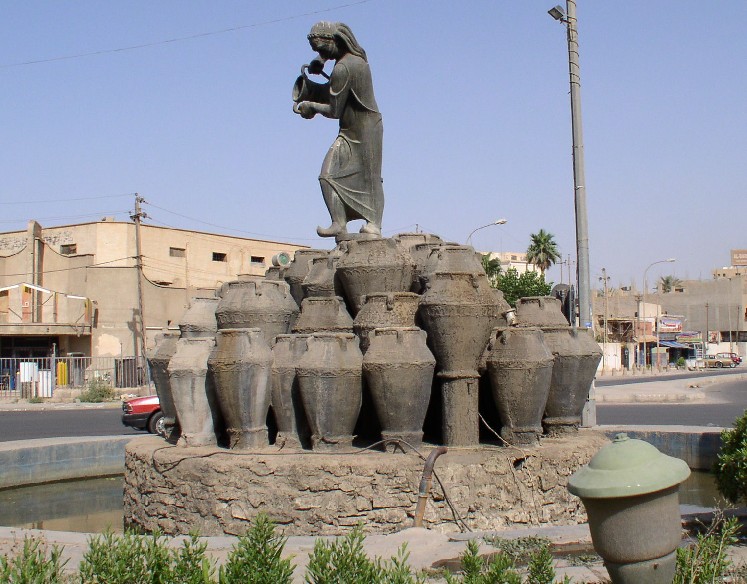
In Baghdad, there is an almost beatific sculpture of a woman pouring from a large pitcher into the urns surrounding her at her feet. Such a serene, pastoral vision – until you know that she is Ali Baba’s handmaiden and that what she is doing is pouring boiling oil into the jars, which contain hidden men who planned to attack from their hiding places in the night.
I never know quite what to do with all of this. My ancestors in the faith seem too extreme to me, repudiating, as some did, all forms of physical beauty; beauty seems as much a divine gift to me as is the air we breathe and the food we eat. It nourishes us somehow.
But mistaking beauty for moral good won’t do either; there’s simply too much evidence to the contrary.
Living in the tension – that, I suspect, is the premier challenge of being human: accepting that very few, if any, of the things of this world are absolutely good or absolutely evil; taking it all in with provisional judgment – judgment willing to be changed with new or different information; seeing the beautiful in the ugly and the ugly in the beautiful – now that’s the job of a lifetime!