Showing posts with label Jerusalem. Show all posts

Monday, April 14, 2014

Only a Boy


[My imagining of a boy dragooned into accompanying Jesus' entry into Jerusalem]

I’m an old man now, but I was only a boy then . . . living with and working for my uncle and his family . . . 

I’ve often wondered how Jesus knew about that colt – none of his followers were from my village – had never been there, as far as I knew . . . 

“The Lord needs it,” they said of the colt . . . actually what they said was that The Messiah needs it – do you have any idea how many Messiahs were running around my country in those days?  Everyone was looking for rescue from the Romans . . . 

They were fishermen and they didn’t know anything about donkey colts – it was pretty comical really – they kept trying to get near her and she kept dancing around so they couldn’t  get close to the reins, so one of them came over and grabbed me by the arm and said ‘You - farm boy!  Untie this son of a donkey and bring it - you’re coming with us!  

Looking back, they didn’t mean me any harm . . . but they just weren’t used to asking children for anything . . . that’s something their master tried to cure them of that I don’t think he ever succeeded at . . .  

Anyway, I don’t know what I was expecting, but their Jesus wasn’t anything special to look at, that’s for sure . . . usually the Messiahs we see coming through the village are big, strong, handsome fellows - you know the kind - the ones any fool will follow – but this guy was different – not memorable at all – I can hardly even call his face to mind, even now . . . and he was quiet . . . sort of soft in his voice . . .

Slowly, we started walking toward Jerusalem . . .what a sight!  People were shouting ‘Hosanna!’ . . . save now! 

As we walked, more and more people fell in behind us, shouting their hosannas and waving their branches . . . not everybody followed - some just watched in silence as we passed by . . . some laughed and pointed – including some centurions . . . they thought we were great entertainment – poor villagers from the far corner of their ‘Empire’ processing into town like it was a parade . . . like we didn’t know our lot, our fate . . . like we didn’t know they were watching . . . but we knew . . . He knew, I can tell you that much . . . whenever he saw them, though, he just seemed sad . . . like he pitied them . . . lucky they couldn’t see his face . . . I don’t like to think what they would have done to him . . . of course, they did, didn’t they?  Only not then . . . 

Hosanna, they kept shouting . . . and I started shouting it too . . .

Finally, we entered Jerusalem . . . somehow, we made our way with the crowd right up to the temple . . . 

As we got closer and closer, it got quieter and quieter . . . even the hosannas seemed to be whispered . . . 

The air seemed to be alive around us . . . and then the wind came . . . sand storm . . . the closer we got, the more the wind blew until you couldn’t see or hear anything . . . most of the people disappeared inside to ride out the storm, but we few continued on . . . I put my hands over the colts eyes to protect them from the grit of the sand and we crept forward, one slow step at a time . . . he didn’t seem to mind – when we came to the temple . . . he just walked up and in . . . disappearing from my sight with his first step . . . 

I stayed with the colt . . . I didn’t know what else to do, where else to go . . . I’ll never forget the sound of the wind while I stood outside the temple holding onto the colt . . . it was like she and I were the only two creatures left on the whole earth . . . the few other people around were just shadows huddled against the howling . . .

When the insiders tell the story, they don’t mention the dust storm, do they . . . well, I guess it’s not their job to give a weather report . . . and they don’t mention me . . . why would they?  I was only a boy . . . 

They tell the important bits – about the parade and the hosannas and the colt and the temple – and I get it . . . those are the things everybody looks for – the signs – that make a messiah – it’s kind of a prophet’s check list with my people – and if this guy was the messiah, his followers needed all the check-list proof they could muster – cos he sure didn’t look or act like who or what  we were waiting for – he came from the wrong people, wrong birthplace, wrong status, wrong looks, wrong horse, wrong message . . . wrong, wrong, wrong!

How could we have been so wrong?  My excuse?  I was only a boy!

I wonder how it would have been if I’d stayed with them, with him?  Of course I know what happened to him . . . and I know the stories . . . but I didn’t stay . . . I went back to my uncle, back to my life, back to everything the same . . . I went back . . . but I was only a boy!!!!!   


Monday, January 6, 2014

Making of our destination a journey and of our journey, a destination

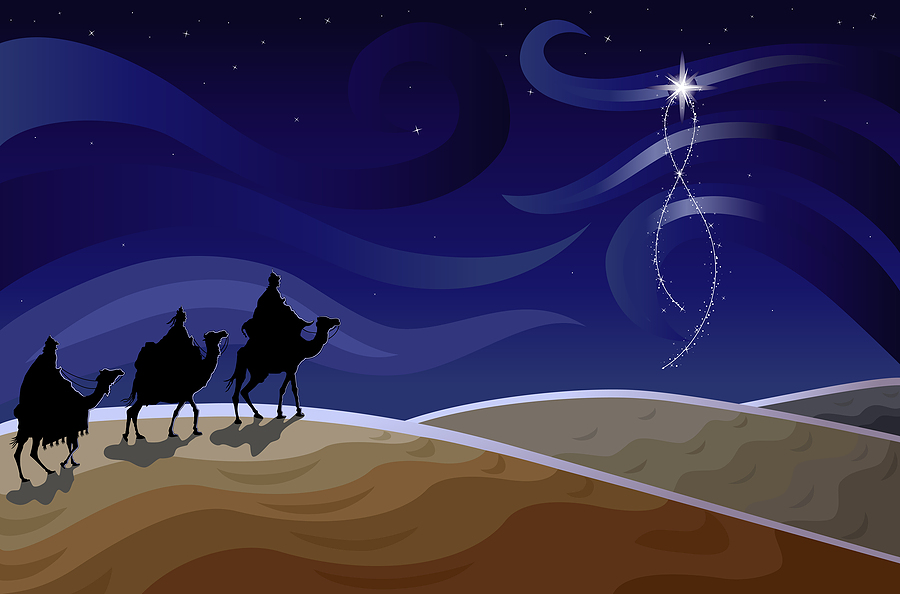
Thinking on Matthew 2.1-12 and wandering magi:

Some wise guys came to town, causing a stir, and I’ve got some questions . . .

Why did the star take the wise guys to Herod and Jerusalem in the first place?  They were following the star, they presumed and so do we, to the new king, to Jesus.  But there’s a detour, as they end up at the first not in Bethlehem, but in Jerusalem.  Why Jerusalem?  Why does God lead these seekers there?  Why give Herod a heads up?  Why place Jesus in such danger?  Maybe they just got lost – following a star as your navigational guide isn’t as exact as GPS.  Judea is a pretty small place and Bethlehem is only about 6 miles from the heart of Jerusalem.  So perhaps it wasn’t divine guidance but human inexactitude that led them to Jerusalem.  Maybe the significance of the star’s leading was only understood in hindsight, as Jesus’ followers sought to find meaning and understanding in all these strange events.  Or maybe it happened just as God planned, with God throwing down on the powers and principalities right from the start – here I am, now what are you going to do? 

Why did the wise men’s news so frighten not only Herod, but all of Jerusalem as well?  Various versions of the Bible in English translate Herod’s (and Jerusalem’s) response in verse 3 to the arrival of the new king as . . . troubled . . . agitated . . . disturbed . . . upset . . . frightened . . . terrified . . . 

Some preachers and scholars say they reacted in this way because the people of Jerusalem (by their conduct) simply weren’t ready for the Messiah, so his coming scared the pants off them.  Others that the coming of the Messiah would interfere with their human plans and they weren’t having any of it.  Maybe.   Maybe any news of change inconvenienced or scared them.

Whatever the cause, what is clear is that the arrival of the Messiah was greeted not as the good news it was, but as bad news – very bad news indeed.  Perhaps the question begs to be asked: for whom is Jesus’ arrival bad news?  And why?

What was the other road by which they left for home?  They were to leave by another road (than the one by which they came).  At its simplest, it’s obvious, isn’t it?  The men so wise they would seek a messiah not their own over many miles and through many lands could not possibly return the same way they had come because they themselves were no longer the same.  They had been fundamentally changed by their encounter and in their changing, their journey, their path, had changed as well.  They came one way and left another.  It’s a beautifully simply way to understand the human experience of Jesus – we come to him one way and we depart from him totally other.  In this sense, the journey of the wise men becomes a metaphor for our own journeys of faith – meeting Jesus changes our trajectory, our direction.  It has to – for who can stand in the presence of the divine and not be changed?

What was the wise men’s true destination?  What was the destination of the wise men?  Was it Bethlehem?  Maybe.  They certainly thought so.  But perhaps their true destination was Jerusalem, where they brought the news of the one to be born.  Maybe their destination, their ending, was back at their own homes, where they would certainly tell of all they had seen, all that had happened.  Maybe the wise men were the first evangelists – proclaimers of Messiah’s arrival.

In a very real sense, the wise men’s destination was Jesus himself.  But their arrival is not an ending; rather it is a beginning – for Jesus, for them, for us.  The journey to Jesus had been important and the arrival – oh, bliss.  But it’s the afterward – the what they did with what they learned, the part of the story that we don’t know, that’s most important, I suspect.

Once a mystery is solved, the story ends.  Not so here . . . for once the mystery has been ‘solved’, once Jesus has been arrived at, the journey to him has come to an end, but the journey for and with him has just begun.

So it was for the wise men, so for us . . . we have come once again to Jesus and so we must surely depart by another road . . . I wonder where it will take us?


Sunday, February 24, 2013

SermonCliffNote: Geography of the Heart


Geography of the Heart

Scripture:  Luke 13.31-35 (NRSV):  Just then some Pharisees came up and said, “Run for your life! Herod’s on the hunt. He’s out to kill you!”  Jesus said, “Tell that fox that I’ve no time for him right now. Today and tomorrow I’m busy clearing out the demons and healing the sick; the third day I’m wrapping things up. Besides, it’s not proper for a prophet to come to a bad end outside Jerusalem.
Jerusalem, Jerusalem, killer of prophets, abuser of the messengers of God!  How often I’ve longed to gather your children, gather your children like a hen, Her brood safe under her wings—but you refused and turned away!  And now it’s too late:  You won’t see me again until the day you say, ‘Blessed is he who comes in the name of God.’”

***

Jesus invokes the image of a hen protecting her baby chicks in the night as he stands on the hills outside Jerusalem and shouts his broken heart into its valley, with no answer save the echo of his own voice.

For Jesus is standing in that horror-filled moment just before the crash, screaming his terror at what is to happen to his people, his children, who, without him, careen in front of the oncoming truck of their own destruction.

We parents have all had those moments . . . car keys given with strict instructions only to spend hours in worry, knowing in our heart of hearts that speed limits are being ignored, safety warnings overlooked.

Like the girl taking the car out by herself for the first time, the people of Jerusalem don’t even have the imagination to see in dreams what Jesus knows.  And it breaks his heart.

All he wants to do is enfold them in his love and keep them safe – even and especially from themselves.  What is he to do?  What is any parent to do?

For now, he will bide his time.  He will wait.  And wait.  And wait.  And when the time comes, he will step in front of the truck for them.  But until then, he waits and hopes it will be enough, sure that it isn’t.

Jesus has come to the heart of his country, to its capital city, to bring himself and all he has to offer for her protection and well-being, but before he can even step one foot inside her gates, he’s already being sent away, because Herod would rather risk the wrath of God than hear about the coming storm.  And as Herod went, so too will Jerusalem go, sheep following the wrong shepherd, or more truly, no shepherd at all.

Jesus reacts as a panicked, broken-hearted parent, watching the inevitable unfold before his very eyes.

The hen image, then, is not a sweet mother moment; no – this is the frustrated terror of the tigress confounded by her inability to protect her new born cubs from the swooping bird of prey. It’s the prayer mantra of the father handing over the car keys for the first time – please, please, please, please.

Jesus is not speaking with the voice of the angry father when you get home too late.  This is the terrified voice of the frightened father worrying and weeping into the night.  And it, this weeping, is for us.  God has given us the car keys and is begging us, pleading with us, to be careful.

Yes, he’ll be angry if we get home late or worse, wreck the car.  But it’s the anger of love – a love that can sadly and all too easily imagine what we cannot even dream of.

Listen and hear the words of your pleading, cajoling, begging father . . . please be careful . . . please!  I know what can happen if you aren’t.  Please let me protect you . . .please listen to me . . . please.